Are smart kitchen gadgets worth it?

Have you ever given any thought to what the word ‘smart’ truly means? At its most basic, it denotes someone who is clever, quick-witted, or very intelligent. But what about when it comes to a smart device? The dictionary (or Alexa, if we’re being honest) would say a smart device is one that’s programmed to be capable of some type of independent action. The keywords there are “some type.” That’s the trouble with smart devices, gadgets, and appliances: “smart” isn’t a universally understood or regulated feature.

Too often, manufacturers, in a bid to sell more gadgets, tack on the word smart in front of any old device. Today’s savvy consumer asks what exactly that means. Is it a clever feature? Wi-Fi connectedness? A companion app? All of the above? Or does something as simple as adding an LED touchscreen to an appliance make it smart?
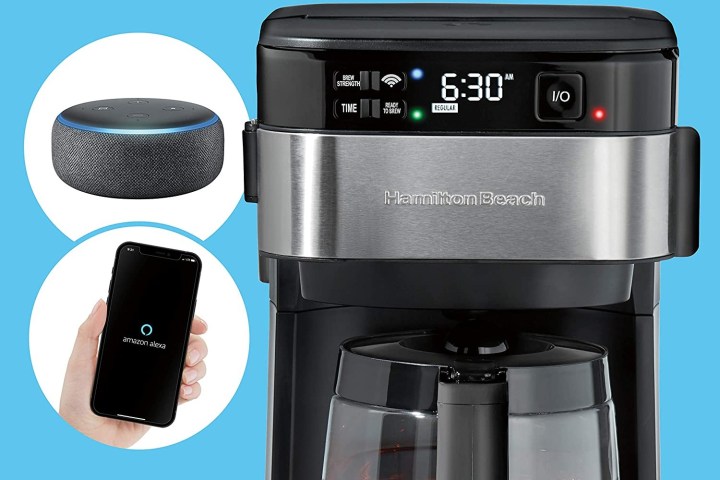
Hamilton Beach Alexa Coffee Maker with an Amazon Echo Dot and app connectivity.
Image used with permission by copyright holder

What is ‘smart’?

A ‘smart’ device can mean everything depending on the manufacturer. It can be a TV that has Wi-Fi or a smart speaker that can listen and respond to your queries. It can even be a gadget with a companion app. But what kind of smarts are you really getting, and is the technology useful and effective?

Smart ovens are a relatively new concept when it comes to the smart kitchen arena, but even in this small tech space, your options vary wildly. Some use curated food deliveries plus QR codes the oven (or a companion app) will scan. Once the code is scanned, the smart oven takes care of setting the temperature, adjusting the cooking time, and notifying you when the meal is ready. Others use store-bought food alongside an app to recommend recipes or cooking programs that promise to cook food perfectly, but you still have to use your head.

Smart but not smart

What about when it comes to smart kitchen gadgets in particular? Let’s take the example of a smart toaster. In the last few years there have been two significant launches of so-called smart toasters: the Revolution Instaglo and, more recently, the Tineco Toasty One.

These toasters are marvels of design and beauty and boast bright touch screens and toasting technology that promises crispy carb perfection. In fact, these are regular toasters with the addition of an LED touchscreen display. That’s it. No Wi-Fi, no “Hey Google, hit me with some toast,” and no tiny robotic arms that can retrieve sliced ​​bread, grill it to perfection, then butter it for you. So while the addition of a glowing screen is nice and may allow you a few more options than a dial numbered one through six, in my book, this doesn’t truly constitute genuine smarts.

They’re also much more expensive than their “non-smart” counterparts — and while they might look fancy, they’re still just a toaster. In other words, most smart toasters aren’t worth your time or money.

Tineco Toasty One on counter with fresh toast.
Tineco

Smart kitchen appliances aren’t smart in the same way that an Amazon Echo smart speaker with a screen is truly smart. An Echo is connected to the web and can listen for you and respond appropriately. It can manage your schedule, turn on lights and adjust a thermostat, and even order supplies from Amazon for delivery.

However, even internet connectivity is no guarantee of a better gadget. Is, for example, a smart TV that allows streaming truly any more valuable than simply plugging in an external streaming TV dongle?

Some gadgets even put ‘smart’ in the name without ever actually adding intelligence, automation, or connectivity. One example is the Click and Grow Smart Garden, which is a great indoor winter garden for growing herbs and lettuce but it has no Wi-Fi, no connection, and no automated watering. It does, however, have an app that will send you push notifications reminding you to refill your water every month. So where is the ‘smart’ in that?

Image used with permission by copyright holder

NutriBullet made the Balance Blender which has a Bluetooth connection to a companion app. The app supplies recipes and works with a built-in scale to help you weigh ingredients in the recipe accurately. Pretty smart. There’s a smart toothbrush that will use your phone’s camera to watch you brush your teeth and give you a full report. Alexa-enabled coffee makers also already exist and allow you to call for your morning java from the comfort of the covers.

But there’s another consideration about these smart appliances: do we need that much help with basic tasks?

It’s possible to brush one’s teeth in two minutes without an app and without connecting to Wi-Fi, and while a camera-based brushing assessment might be nice for a check-in once in a while, it’s not the type of technology you’re looking for. going to want to use twice each day since it adds time and additional steps. Same deal with the Bluetooth blender; it might be helpful to have the built-in weight display scale on your smartphone the first time you make a recipe, but will you really need it after that? And while a digital touch screen is fun to watch while you’re waiting for toast, is it worth the literally hundreds of additional dollars you’ll spend?

As it stands, most smart kitchen appliances simply aren’t “smart” enough to recommend. Touchscreens and smartphone apps are great, but do they really make your life significantly easier?

A robot vacuum can save you hours of time every week. A video doorbell helps keep your home secure. Smart locks offer flexibility for large families. These smart gadgets bring massive improvements to your life and justify their price tags. But is a $300 toaster with a touchscreen really that much better than your $30 toaster from five years ago?

More and more kitchen gadgets are adding smart to the name. Don’t blindly buy the hype. It’s up to us as consumers to understand exactly what we’re really getting and decide if it’s truly worth it. And until kitchen appliances start to introduce “smart” features that actually make your life easier, there’s not a whole lot to get excited about.

Editors’ Recommendations


The best tech gifts and gadgets of 2023

If you couldn’t tell, we’re unabashedly nerdy about tech here at Engadget. While our jobs revolve around testing and reviewing gadgets and reporting on technological breakthroughs and social media controversies, our staff is composed of people who genuinely love technology and everything that goes into making cool gadgets. If you have someone in your life who shares the same passion, it might be difficult to find a piece of tech that you think they’d appreciate (and one they don’t already own). Here, we’ve gathered some of our favorite gear that we’ve tested and used and think would make great gifts for the tech nerd in your life — and no, they all don’t cost a fortune.

Marshall Emberton II

Will Lipman Photography for Engadget

Any tech lover will appreciate the Marshall Emberton II speaker, and not just for its good looks. The latest version of the compact, rectangular speaker has 10-watt full-range drivers and passive radiators that help deliver the balanced sound that’s signature to the brand. Its 360-degree sound makes it a great choice for small get-togethers as well as tiny desk concerts while they’re working from home. Marshall improved the battery life on this model too, bumping it up from 20 hours to 30, and it has a more durable IP67 rating as well. And if your giftee ever decides they want to expand their sound system, Stacked Mode will let them pair multiple Emberton II speakers together. – Valentina Palladino, Senior Commerce Editor

$120 at Amazon

Amazon Echo Show 15

Will Lipman Photography for Engadget

If the tech geek in your life is into smart home automation, this gift might help bring it all together. The Echo Show 15 serves at least five different purposes: a display for video doorbell feeds, smart home control deck, widget-driven bulletin board, compact smart TV and home for Alexa’s soon-to-be-chattier assistance. The 15-inch screen is big enough to accommodate all of the above and can be wall-mounted in portrait or landscape orientations. And, while it comes with a remote, it can also be operated via touchscreen or just by talking. — Amy Skorheim, Commerce Writer

$280 at Amazon

Sonos Ray

Photo by Nathan Ingraham / Engadget

Giving the tech-lover on your list a way to get better sound out of their TV will be a welcome treat. While soundbars can be unwieldy and expensive, the Sonos Ray is neither. The compact gadget earned a spot on our list of best soundbars thanks to its relatively small size, which will fit nicely into most living room setups. It will also provide a noticeable bump in audio quality, whether they’re watching action movies, suspenseful dramas or live sports. The Ray also supports AirPlay 2 and can be used to stream music, audiobooks and other content from various services even when the TV is off. And if your giftee decides to expand upon their audio system over time, the Ray will pair seamlessly with other Sonos gear. – VP

$279 at Sonos

DJI Mini 3

DJI

If you want to gift a true tech toy to the gadget lover in your life, you can’t go wrong with a drone. DJI’s Mini 3 is very similar to the Pro model in that it sits above it in the lineup, sans forward and rear obstacle detection and ActiveTrack. It also weighs only 249 grams, so most countries do not require users to have a special permit to fly it. The DJI Mini 3 can shoot 4K 30fps video and take 12-megapixel photos, and its camera can flip 90-degrees to offer vertical photos and video as well. DJI’s QuickShots are also supported here, which makes it easy to take short, social media-friendly videos without much human intervention — the drone does most of the work on its own. We recommend springing for the package that includes DJI’s RC controller; your giftee will thank you – it’s a lot easier to use than their smartphone. – VP

$609 at eBay

Audeze Maxwell

Audeze

The Audeze Maxwell is the best wireless gaming headset we’ve tested for those who spend lots of time gaming with friends online. First and foremost, it sounds great, with impactful but not overblown bass and a generally high level of detail that should keep your loved one enveloped in a multiplayer battle in Hello Infinite or a tense stealth scene in The Last of Us.. The detachable mic sounds clear and does a superb job of subduing background noise. It’s definitely on the bulky side, but the cushy design looks far less obnoxious than most gaming headsets. Battery life is good at roughly 80 hours, plus there are models for both PlayStation and Xbox (or PC). — Jeff Dunn, Senior Commerce Writer

$299 at Amazon

Anker Prime 20,000mAh Power Bank

Will Lipman Photography for Engadget

Chances are, the person who’s into all things tech already has a spare battery pack or two, but Anker’s Prime bank is a little different. First, the 20,000 mAh size is big enough and the 100W ports are powerful enough to juice up even a laptop. There’s a display that tells you how much charge the battery has left, as well as how much it’s pumping out per port. But the best part is the recharging base. Instead of the (admittedly minor) hassle of plugging the power bank in to recharge, just set it on the base and it’ll always be ready to go. Unfortunately, the base is a separate and not inexpensive purchase, but it makes for a haute portable charging experience. — US.

$130 at Amazon

Peak Design Tech Pouch

Engadget

There’s a good chance that, when your tech-loving companion travels, they bring along the gear that means the most to them. Peak Design’s Tech Pouch will give them a way to organize all of their small gadgets and keep everything neatly in one place. The origami-style pockets can accommodate things like phones, wireless chargers, power banks, adapters, cables and more. Plus the outside shell is water resistant. The bag can stand upright even when open, which will make it easier to find what they need in a pinch, and the exterior pocket has a passthrough opening that will allow them to connect to a power source and charge up items still inside the bag. The Tech Pouch is roomy without being too big or cumbersome, making it an easy gift for anyone who’s constantly on the go. – VP

$60 at Peak Design

Logitech G PowerPlay Wireless Charging Mouse Pad

Logitech

The Logitech PowerPlay is a mouse pad that wirelessly charges a mouse as you use it. It only works with a handful of Logitech mice (we recommend the G Pro Physically charging a mouse that much of a hassle, but once your loved one no longer has to worry about cables or charging, it may be hard for them to go back. The mat also comes in both cloth and hard plastic surfaces; the former is softer and quieter, while the latter is a little slicker for fast movements in games. — J.D

$100 at Amazon

Govee M1 RGBIC LED Light Strips

Govee

Smart lights are a great way to add personality to any room, and Govee’s M1 RGBIC smart light strip will make a great gift for any tech lover who wants to match their home’s vibe to their mood. This model has an upgraded chipset, higher brightness and richer color performance than previous Govee light strips, and the entire thing can be controlled via the company’s companion app. Your giftee can customize their lights by segment, giving each a different color if they wish, and control the whole thing with Alexa or Google Assistant commands. Govee’s app has an impressive number of preset light effects and customizations, but users can create and save their own to use whenever they want. They’re sure to get regular use, whether to set the mood for their next game stream, or on movie night. – VP

$70 at Amazon

Tidbyt

Tidbyt

The Tidbyt is a small LED light board that can display the time, weather, sports scores, calendar and transit alerts, news headlines or that floating DVD logo that never hits the corner of the screen, all in stylish chunky pixels. Its walnut hardwood case is about eight inches long and doesn’t include any mics or cameras. It’s a piece of nerdy decor that, at $199, is probably overpriced. But hey, this is a gift guide, and it looks nice on a bedside table or kitchen counter. — J.D

$199 at Tidbyt

Boox Page

Boox

When testing Boox ereaders for our guide, I didn’t get them at first; the library is just open domain stuff and the proprietary reader app doesn’t support rights-managed titles. When I realized that this was simply a compact tablet based on Android with a (rather crisp) E Ink screen, it finally made sense. It can run just about any app on the Google Play store; it can be a Kindle, a Kobo, a Libby library book reader and many things in between. The Page has a premium feel with a soft front light and snappy page turn buttons. Those buttons, and just about every other feature of the Page, are customizable and there are plenty of ways to tailor the device even further. In short, it’s an impressively built ereader that the tech-obsessed will get a lot of use out of, while giving their eyes a break from the bright LED screen. — US.

$250 at Boox

LEGO Nintendo Entertainment System

Engadget

Every person I know who’s deep into tech started their journey with LEGOs, video games or both. This delightfully retro and incredibly detailed TV and original NES LEGO set will warm the heart of anyone who’s ever held a controller in their hands. The finished set stands about ten inches tall and with 2,600+ pieces, it’ll take many hours to build. Afterwards, it’ll look excellent on a shelf and strike joy in everyone who sees it. If anyone I know is reading this, please make this my gift this year. — US.

$286 at Amazon

ASUS ROG Strix Scope II 96 Wireless Gaming Keyboard

Will Lipman Photography for Engadget

If you’re shopping for someone who spends most of the day typing and likes to unwind with a good game, the ASUS ROG Strix Scope II 96 Wireless should be a treat. Horrendous name aside, this is a premium wireless mechanical gaming keyboard, with a sturdy aluminum frame and crisp keys that are delightfully smooth to press and relatively quiet in action. Its 90-hour battery life (with RGB lighting on) is solid, it comes with a detachable wrist rest and it has a clever multi-function key that puts all its volume, media and backlighting controls in one spot. It should make any PC gamer’s work or play time more comfortable. — J.D

$160 at Amazon

XGIMI MoGo 2 Pro 1080P

XGIMI

Even the person who has everything may not have one of these yet. XGIMI’s MoGo 2 Pro is one of our recommended projectors because it’s small enough to fit in a backpack and delivers a detailed image that’s relatively accurate. There are HDMI, USB-A and USB-C ports, but it also supports Chromecast and has AndroidTV built-in. To play it outdoors, you’ll need either a long cord or a battery pack as this doesn’t have an internal one. But at under $600, it’s pretty affordable for a quality projector. — US

$448 at Amazon