
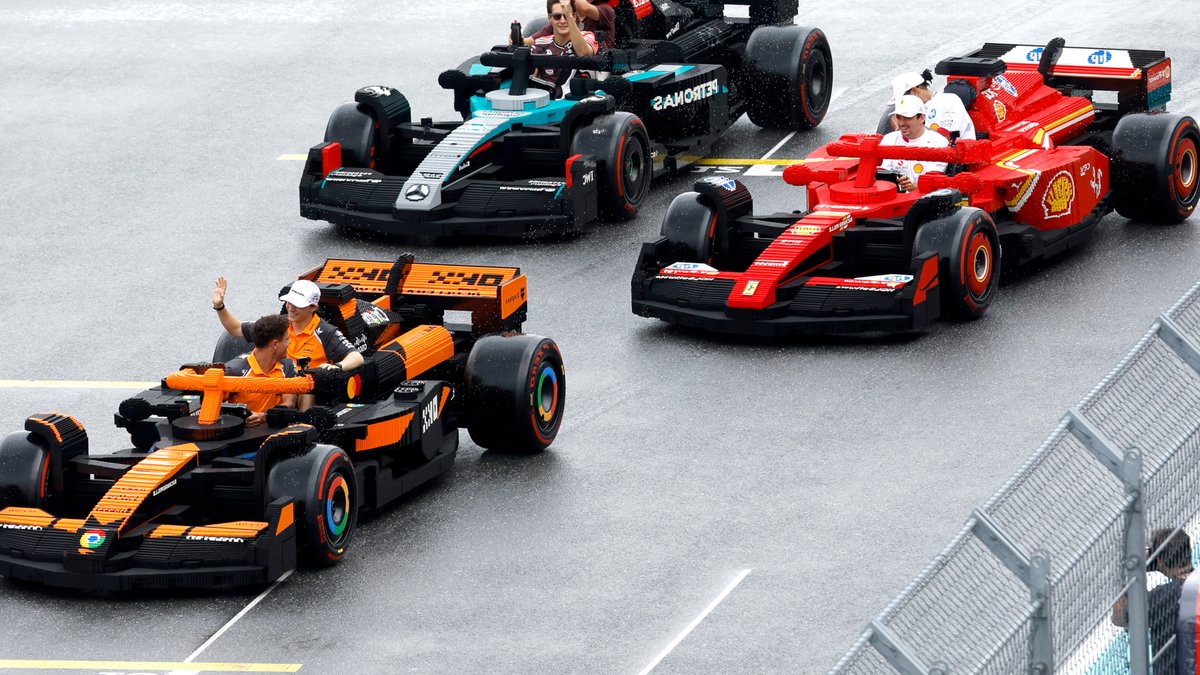
Two years ago, Lego and Formula 1 announced a licensing deal that has since transformed into a major motorsport collaboration. What began as a standard agreement for Speed Champions sets has expanded into life-sized drivable cars and official racing liveries. The partnership has grown to include a presence in the F1 Academy and detailed helmet replicas that drivers bring to the track.
A Strategic Partnership Beyond Billboards
Lego and Formula 1 confirmed their global multi-year strategic partnership in November 2024. Neither company disclosed the financial terms, and the deal sits outside F1’s official “Partner” portfolio, which includes major sponsors like LVMH. This structure suggests a focus on product and activation rather than traditional trackside advertising.
F1 teams collectively generated around $2 billion in sponsorship revenue last year. While Lego’s exact investment remains private, the scale of production indicates significant commitment. The arrangement allows Lego to tap into a fanbase accustomed to spending on branded gear, while F1 gains a playful entry point for younger audiences.
Engineering Life-Sized Cars
The partnership escalated visibly at the Miami Grand Prix in May 2025. A team of 26 designers and engineers spent a year constructing ten fully drivable F1 cars. Each vehicle weighed 1,500kg, utilized roughly 400,000 bricks, and featured real F1 rims and tires on a custom frame.
Lead engineer Martin Šmida explained the technical challenges, including the metal understructure and electric motor. His colleague, Marcel Šťastný, noted the drivetrain could exceed the 20km/h limiter, but speed was not the objective. “They’re about the moment, the joy, the surprise,” Šťastný said.
Related: Disney Gives TikTok Creators Pixel Marvel Star Wars
Unlike typical licensing deals where toys simply replicate existing machinery, this collaboration blurs the line between merchandise and motorsport engineering. By constructing vehicles that actually function on a track, Lego has moved from passive replication to active participation in the racing spectacle.
All twenty drivers participated in the parade lap, resulting in some inevitable on-track contact.
From Merchandise to the Paddock
By late 2025, the collaboration deepened with a move into actual competition. Lego and F1 Academy director Susie Wolff announced a Lego-branded entry for the 2026 season. Dutch racer Esmee Kosterman will drive car number 32, a reference to the year Lego’s founder began producing toys.
Wolff described the initiative as a “pinch me moment” for young girls interested in motorsport. The car’s livery was designed in-house by Lego, matching a Speed Champions set released simultaneously. This step marked a shift from merchandise inspired by F1 to F1 being partially built by the toy manufacturer.
Helmet Designs and Last-Minute Changes
The 2026 season brought a focus on individual drivers with helmet sets for Charles Leclerc and Lewis Hamilton. Both drivers carried life-sized brick replicas of their helmets into the paddock. The process became complicated at the Monaco Grand Prix when Lando Norris, driving for McLaren’s 1000th race celebration, won the 2025 World Championship.
Related: The Importance of Insurance: Protecting Your Precious Lab Grown Engagement Ring in London
Norris’s transition from number 4 to number 1 forced a scramble for Lego’s design team. Dan Meehan, Lego’s creative lead, stated they were “co-creating a real life thing” rather than just recreating an object. The final set includes a hidden spare tile with the number 4, a remnant of the original design.
Negotiations for the minifigures even extended to Norris getting a haircut to match his plastic likeness.
The Silverstone Expansion
Ahead of the British Grand Prix, the project expanded again with individual drivable karts for all 22 drivers. Unlike the Miami cars, these karts featured proper bumpers to prevent damage during the parade. Despite safety improvements, the event remained chaotic, with several drivers and FIA President Mohammed Ben Sulayem ending up in the gravel.
The partnership continues to evolve, with products confirmed for upcoming seasons. What started as a collection of small plastic models has become a multi-faceted presence in the paddock.
